As I was walking home from work in San Francisco a number of years ago, a Days Inn caught my eye. The hotel itself is nothing special, but it sat at an odd angle to the street. Why would anyone build that way, I wondered. Next to it was a wide-open parking lot, something of a rarity in the city. Clearly, something had prevented the hotel owners from building on a rectangular footprint. But what could it have been?
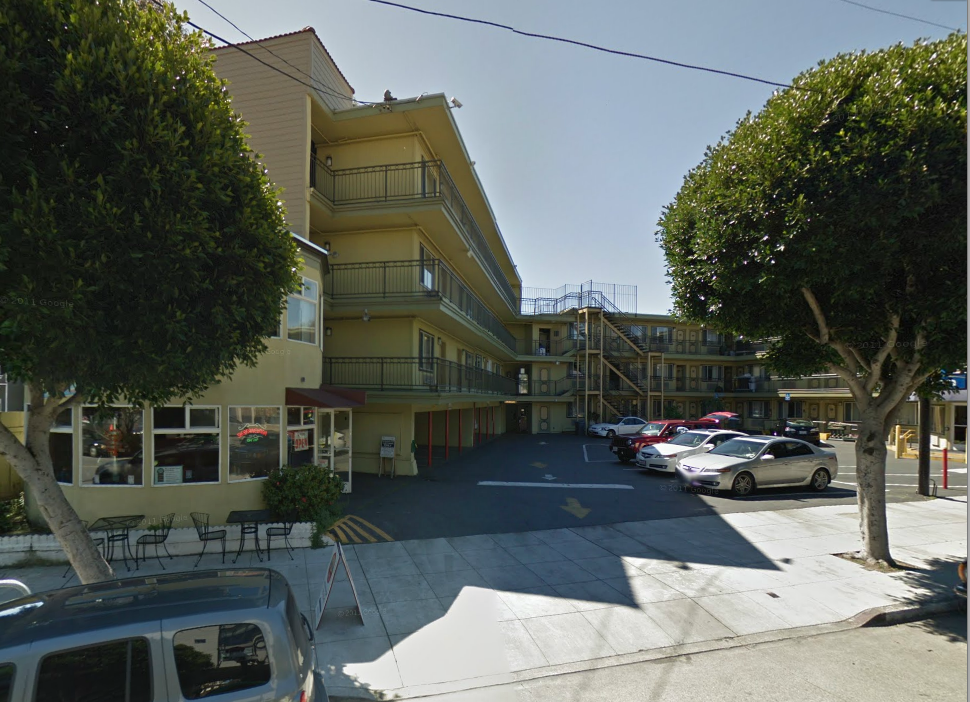
At home, I pored over aerial photographs of the building and the parking lot. Upon zooming out, the answer was apparent. A trail of parking lots and angled buildings snaked through the neighborhood back to the freeway. Oddly shaped buildings remained, accommodating an interloper that is now gone. The disruptive structure was a double-decker spur of the Central Freeway built in the 1960s amidst the San Francisco freeway revolts. Like other double-decker freeways in the Bay Area, it was badly damaged during the 1989 Loma Prieta earthquake and had to be removed.
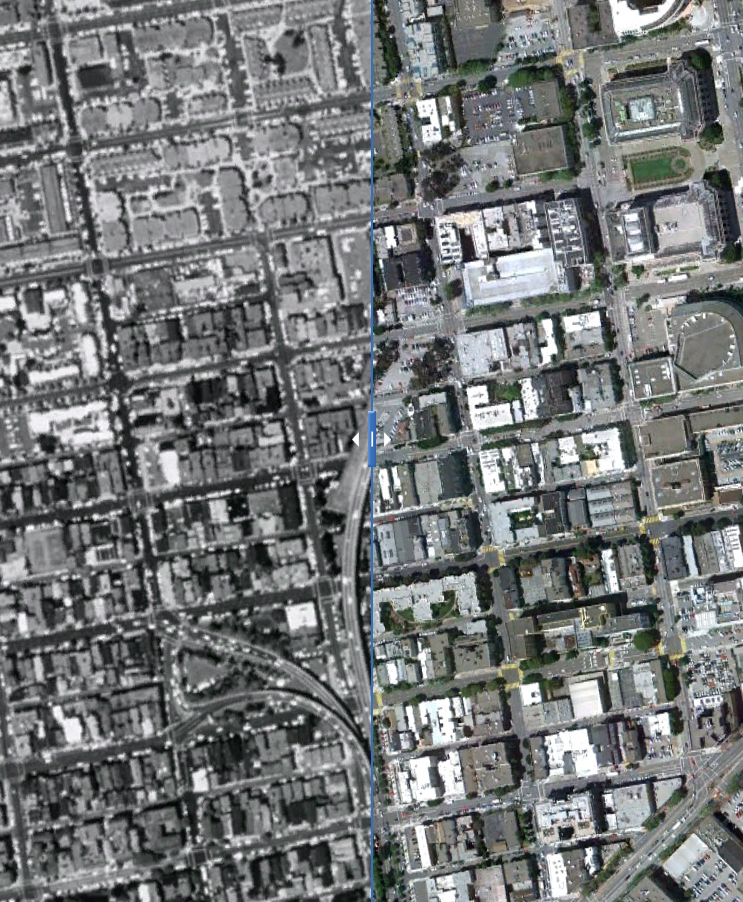
click to view interactive version
Parts of the old right-of-way have been reclaimed. The old ramps leading to and from Fell St. and Oak St. are now the Hayes Valley Farm. Octavia Boulevard has been transformed into a bike and pedestrian friendly thoroughfare. And buildings now stand in other places.
Such ghosts of geography are everywhere. Old land uses and geologic processes can leave marks on the landscape that are sometimes blurred but not always expunged. Chicago is full of geographic ghosts that resulted from the removal of old train tracks. Trees trace the path of an old section of the Green Line.
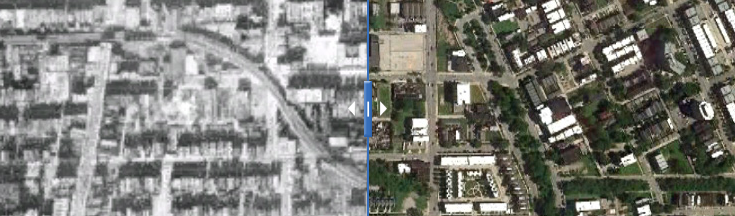
click to view interactive version
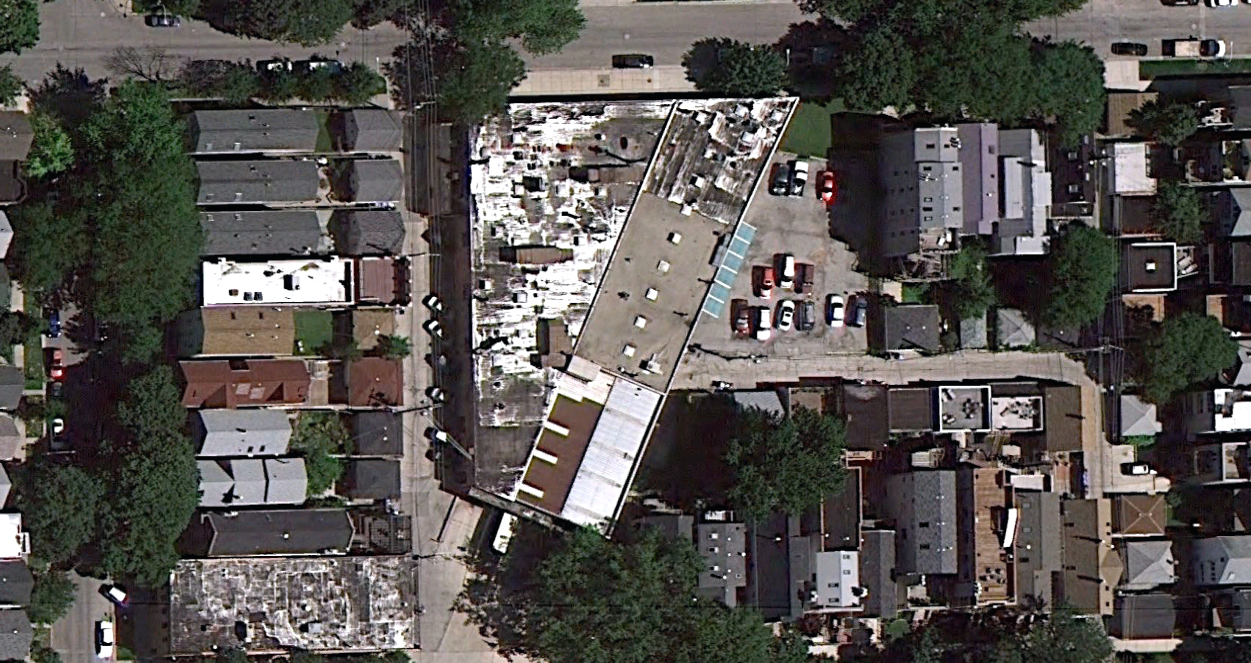
And buildings balloon to fill old right-of-ways formerly used by freight trains.
Even geology expresses itself in today’s land uses. Farmers planting on drumlins unwittingly map the direction of the Wisconsinan glaciers.
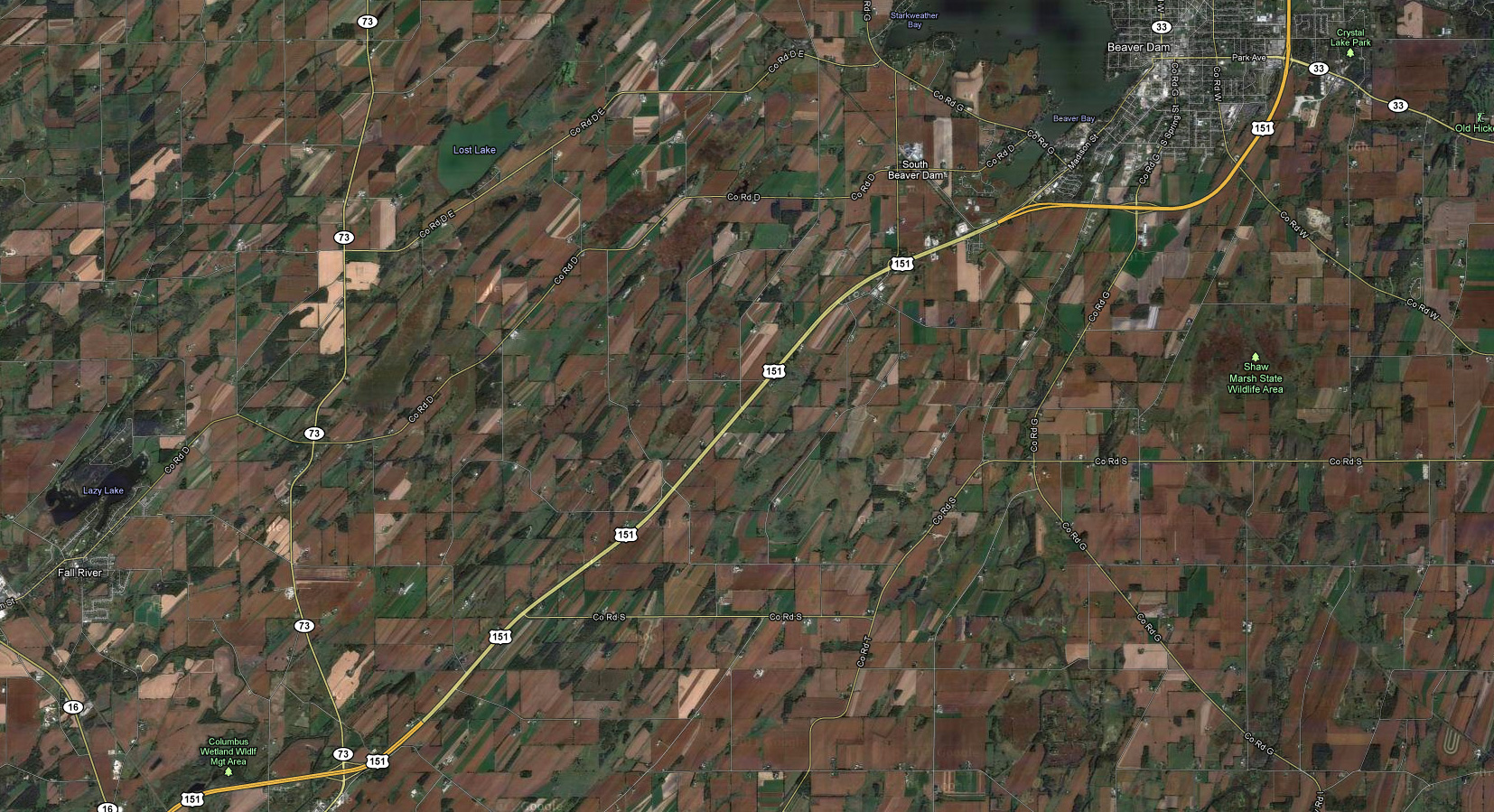
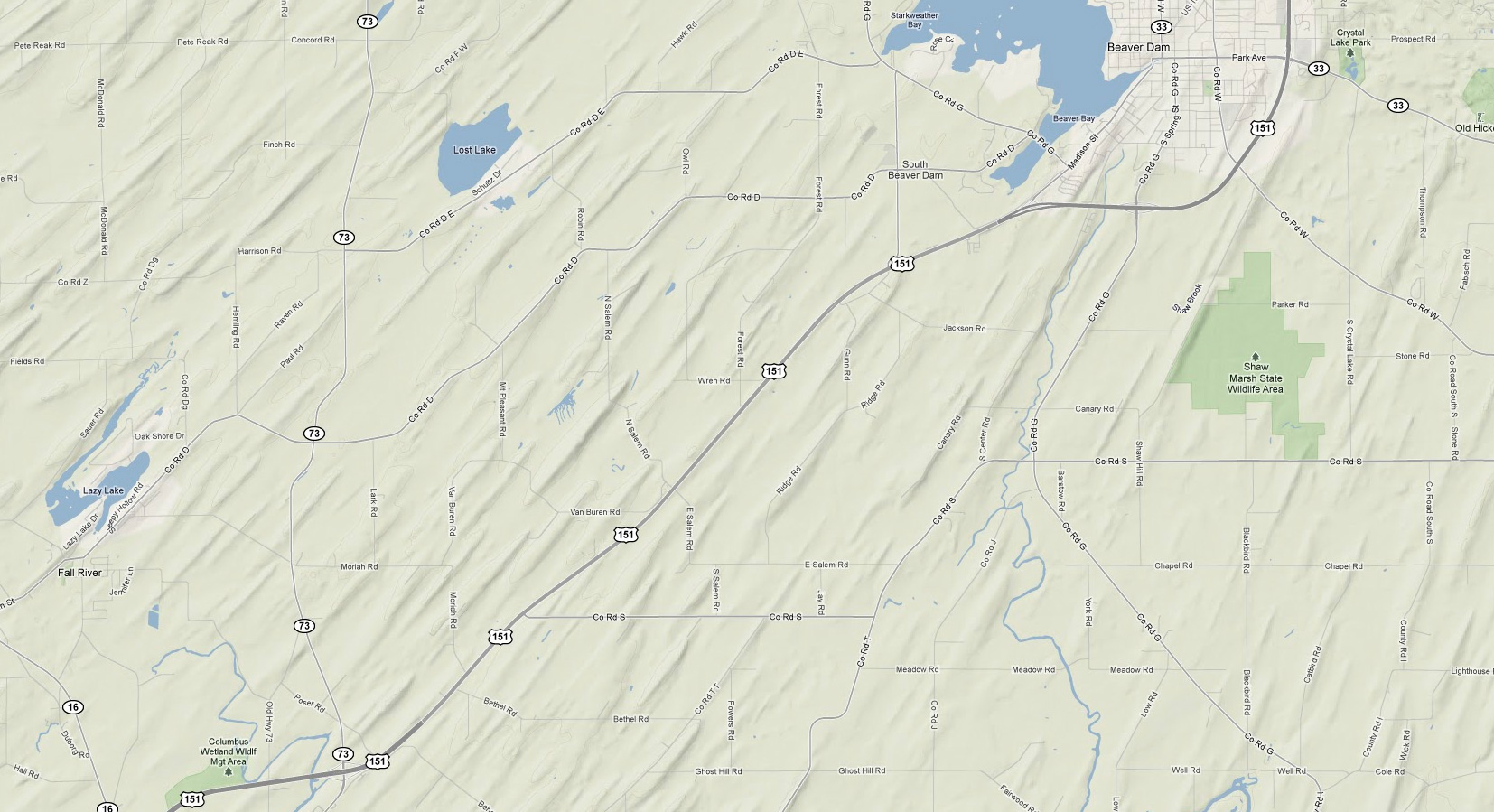
The Appalachian Mountains dictate where people farm and live.
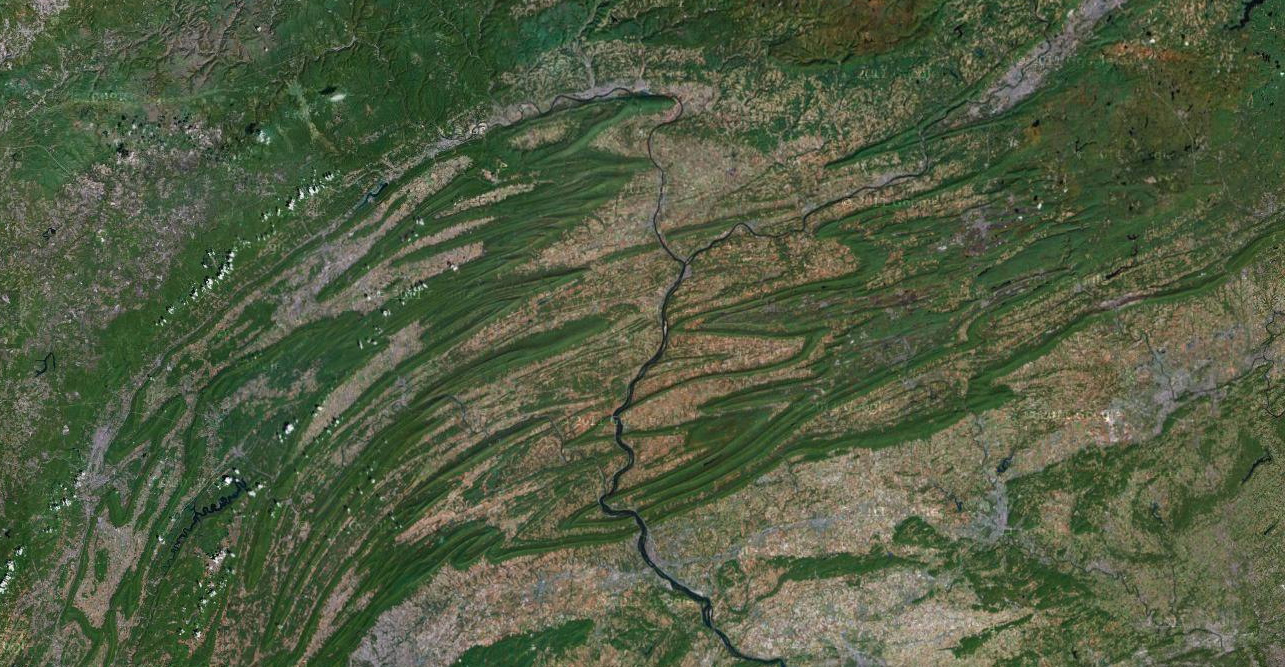
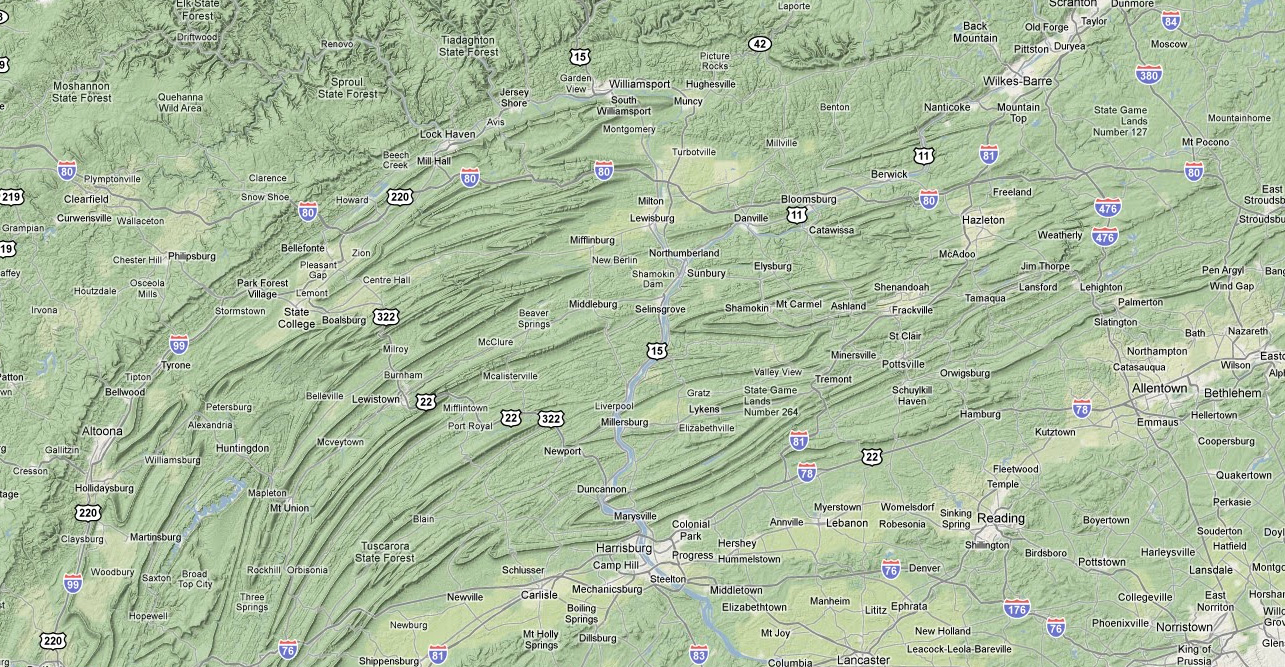
Ghosts of geography may be obvious, like New York City’s High Line…
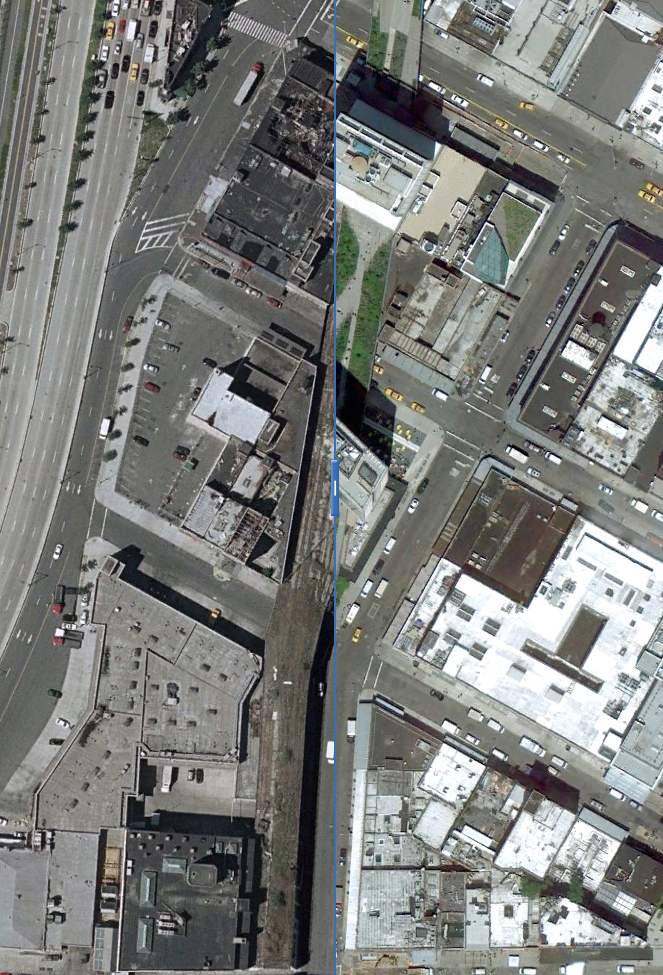
click to view interactive version
..or more subtle like the trees in Sue Bierman Park that used to line the on and off ramps that fed the now-dismantled Embarcadero Freeway in San Francisco.
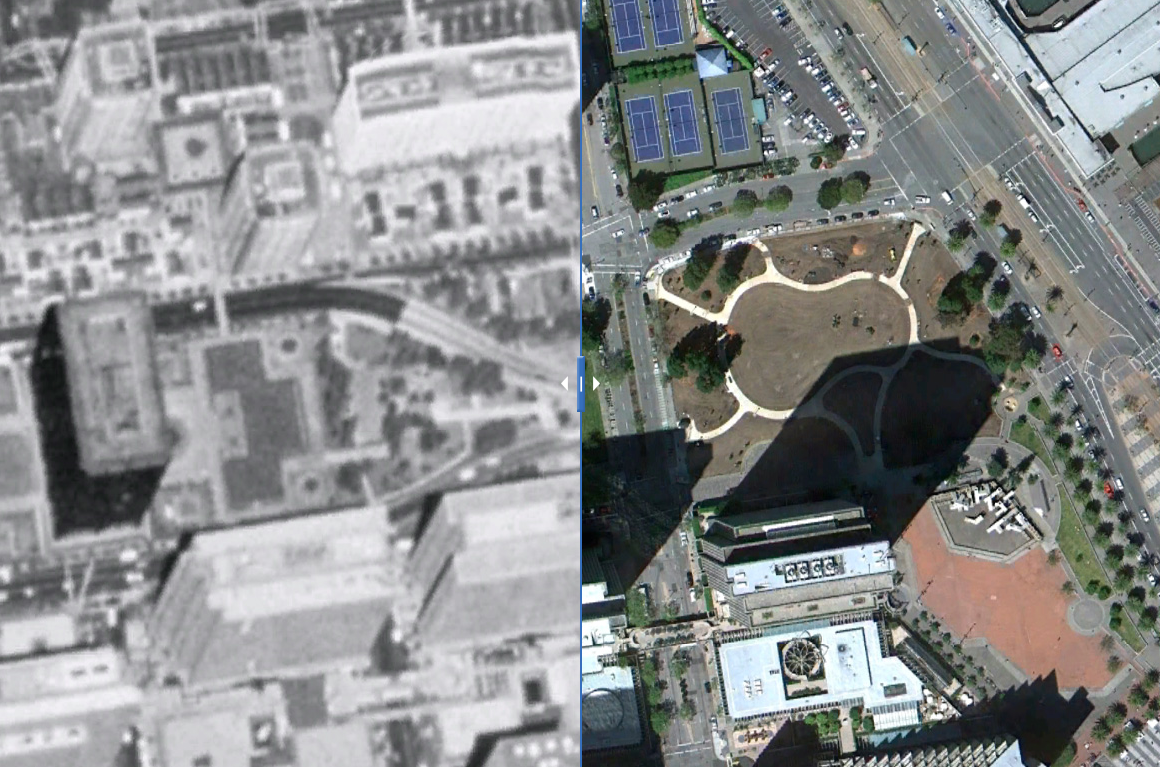
click to view interactive version
The past is reflected everywhere in geography. What ghosts are in your neighborhood?
Related posts:
Density in the pre-Columbian United States: A look at Cahokia


One of my favorites is the old San Jose Railway route that makes Parque Ninos Unidos into a triangle, creates a weirdly long and diagonal apartment building between Shotwell and Folsom, and ultimately forms Juri commons park between Guerrero and San Jose: http://maps.google.com/maps?q=sf&ll=37.754082,-122.41455&spn=0.004911,0.009645&gl=us&t=m&z=17&vpsrc=6
That is a great one, Jacob. Love it.
In Berkeley theres an old rail line thats partly been converted to a greenway, but you can see the remnants cutting through the blocks here http://g.co/maps/qnrrs
On this map http://homepage.mac.com/lpetrich/www/transit/Key_System_Map.gif you can see where the spur branches off from the line that ran on Sacramento St
The greenway goes all the way through to rejoin the main right of way, which in El Cerrito has the elevated BART above it.
Another great one! I loved finding evidence of the old Key Route lines, but I never stumbled on that one. Makes sense why West St. Is such an oddity–no curbs, few original houses face it. This explains that, too. Perfect.
You’ve just inspired me to seek out ghosts of geography in my new neighborhood, for sure.
In my line of work as a Historic Preservation Planner I frequently run into ghosts on a smaller scale… When I’m examining a structure prior to rehabilitation or restoration I frequently run into, and am often seeking out, evidence of original paint colors, traces of old plaster work, or what we call “ghost lines” from windows and doors that have been relocated or filled in.
We also call those huge signs that were painted on masonry buildings long, long, ago in the days before billboards “ghost signs”. I’ve seen some great ones across the bay from you in downtown Oakland. I’m sure SF has plenty hiding out on old brick buildings too. I love finding them. I’ll have to do a blog post of the ones we have here in San Diego.
Really great post.
Pingback: Links for urbanists – No. 4 « The Melbourne Urbanist
I used to do environmental site assessments to determine the potential for contamination. Ghosts were often evident on old photos and maps and the causes not always pleasant. Worse, however, were the ghosts of dead land uses that were not readily evident or had spread their impacts invisibly. Good article.
Another fantastic article. You interactive before and after aerials have caused me to waste another otherwise productive afternoon!
Happy to oblige!
Pingback: Los Links 9/30 | En Tequila Es Verdad
My goodness Tim, This is fantastic!
Fascinating article. And really fantastic graphics. This made me think of a map of the U.S. I saw some time back composed solely of streets: no other markings were made to create the map, and yet you could see geographic and geopolitical features, like mountain ranges and cities. The map is available for viewing (and purchasing) over at
http://fathom.info/allstreets/
Certainly a rebuttal to the aristotelian street grid of the 20th and 21st centuries.
So fascinating! I’m grateful to you for peaking my curiosity about something new.
Pingback: Hayes Valley - Patrcia's Green park and neighborhood businesses
i’ve done a ton of environmental site assessments as well, not back home in SF (although i did some historical research there), but in St. Louis, where I’m currently located. I go back to 1875 and previous, with old fire insurance maps, pen-and-ink perspective sketches done from hot air balloons, and the like. Fascinating stuff.
Man, this is fantastic! I have been looking for months for pictures of the old Central Freeway, particularly where it intersected with Turk/Gough and Franklin/Golden Gate. Where did you find the aerial photos?
I found those in Google Earth. There’s a historical aerial photo layer you can download that may have what you’re looking for. If not, the UC Berkeley map library may be useful.
Great post. Over a decade ago I appraised a diamond shaped building in SW San Francisco that was built in an old railroad right of way, which was my introduction to ghost geography. I’ve always been on the lookout for it since then. (A quick look at Google Maps lends me to think that the property was 1000 Mariposa. I remembered you could see it from the highway).
Wow I have always wondered such things!! Fascinating article!
Wow, great article! Ghosts of geography must be everywhere. In older days the town where I live had a lot of railway to transport coal. Here’s one I managed to find:
http://goo.gl/maps/Vg9BX
There are dozens if not scores of towns in the California central valley with a wide avenue at funny angles to the rest of the streets. This ave. is divided and lined with oleanders that block the lights of oncoming traffic.
It’s a relic of the old CA-99 highway. 99 originally ran through town before it was upgraded and realigned(CA-99 now meets interstate freeway standards for most of it’s length). The old roadbed and flowering oleanders remain though.
Boston is full of these, I’m certain – as has been oft-noted, our streets are on old cow paths – but a recent addition comes curtesy of the Big Dig. The Rose Kennedy Greenway sits below where I-93 used to run elevated through the city and above where it now runs underground. Google Maps: http://goo.gl/maps/dlZyR
Looking at the city just now, I found another similar project by looking at buildings: Southwest Corridor Park (http://en.wikipedia.org/wiki/Southwest_Corridor_Park), intended for routing I-95 through the city, which never happened. See it here: http://goo.gl/maps/4xLx8
Fantastic work. The interactive aerials are marvelous. I got here by googling ‘”Parque ninos unidos” train’ after seeing that weird curved diagonal that cuts through multiple blocks in the Mission. That would be an awesome one to explore with an interactive aerial.