Segregation Is Bad for Everyone

Emily Badger, reporting for the Atlantic Cities:

Segregated regions – by race as well as skills – have slower rates of income growth and property value appreciation. And this isn’t just true for minority families stuck in segregated pockets of inner-city poverty. It’s true for everyone, the suburbs and city alike. 

Post to Twitter, Facebook

We all want to live in small towns, and it’s killing cities

Downtown Northfield, MN

A bunch of economists and a blogger are trying to dissect the riddle of why metropolitan population density has fallen in the United States. Robert Shiller (yes, that Robert Shiller) seems to have unknowingly kicked off the whole thing when he wrote an essay a few weeks ago in which he said housing prices have actually been pretty stable when you adjust for inflation.

Bill McBride took issue with that, essentially saying that because land is scarce in cities, the value of the land (and the homes on it) should go up. Noah Smith didn’t quite agree with McBride, arguing that changes in transportation cost—everything from automobiles to telepresence—will counter the effects of population density over time, which is why house prices should remain flat. Paul Krugman jumped in and sided with Smith, mostly, citing the issue of declining metro population density across the United States.

Then Felix Salmon, the blogger, entered the picture. He wrote a post a few days ago laying out his solution to the riddle of why metro population density is declining. Rich people, he says, are moving to the city in larger numbers, and because they can afford more space, urban population densities are either holding steady or falling. That’s been pushing less wealthy people out to the suburbs and beyond. I’m skeptical that’s the real reason.

Most of the previous decade’s growth in the U.S. happened in the exurbs, those far flung outposts on the fringes of metro areas. There, populations rose by about 5 percent, much higher than the zero to 2 percent elsewhere throughout metro areas, including low-density but closer-in suburbs. People forgoing suburbs for the exurbs—that’s a nuance of the statistic that makes me question Salmon. If people are being driven out of the city because of high rents, then the suburbs should be growing swiftly, too. But they’re not—at least not as much as the exurbs.

Rather than reacting to what the rich are doing in the city, I think it’s more the result of how most of the rest of us would like to live. The exurbs are closer, by many measures, to the small town American ideal than the city or even the suburbs. Exurbs have single-family homes, big lots, wide streets, and a nearby countryside. The city doesn’t have that, and many suburbs don’t anymore, either—as cities swell, they’re becoming indistinguishable from the city. The exurbs are the new suburbs.

Krugman tries to drive home his point, saying, “the average American lives in a quite densely populated neighborhood, with more than 5000 people per square mile.” As such, he says, “real” America isn’t a small town, but rather something like metropolitan Baltimore. By pure statistics, he’s right. But that doesn’t necessarily mean the U.S. is a country trending toward Baltimore. A statistical snapshot can’t outweigh decades of cultural legacy. Most Americans may live like Baltimoreans, but do they want to?

Our cultural tendencies suggest we don’t. As long as the American ideal is to live in a small town—which to many people¹ means big yards, small downtowns, and concomitant low population densities—then that’s where we’re heading as a nation. If cities are to succeed, maybe they need to look to small towns for inspiration. Not the low densities—it wouldn’t be much of a city, then—but the more abstract qualities that draw people to them.


  1. Not necessarily me, though that’s a post for another time.

Photo by Northfielder.

Related posts:

Town, section, range, and the transportation psychology of a nation

How population density affected the 2012 presidential election

How far should you live from work?

Post to Twitter, Facebook

China’s bizarre architecture

Lily Kuo, writing for Quartz:

Bizarre buildings have increasingly been piercing China’s skylines, earning the country a reputation for being “a playground for bad design.” Unattractive Chinese buildings have become so commonplace that a Chinese architectural firm, Archcy, has started surveying residents on what they believe are the country’s 10 ugliest buildings (article in Chinese). One architect last year said choosing just 10 was “very hard” but a million he could do.

Post to Twitter, Facebook

Lost in the Geometry of California’s Farms

Verlyn Klinkenborg, writing about California’s Central Valley for the New York Times:

It’s easy to let yourself be overwhelmed by the agricultural geometry of the valley, all those rows seeming to rush past as you drive. But to understand its true immensity and capacity for transformation, you have to drop down off the interstate and onto the valley floor.

There is something stunning in the way the soil has been engineered into precision. Every human imperfection linked with the word “farming” has been erased. The rows are machined. The earth is molded. The angles are more rigid, and more accurate, than the platted but unbuilt streets out where easy credit dried up during the housing crisis. This is no longer soil. It is infrastructure, like the vast concrete sluice of the California Aqueduct, like the convoluted arrays of piping that spring up everywhere at the corners of fields.

Post to Twitter, Facebook

The Human Dimension of Thetford Forest

Thetford Forest

NASA Earth Observatory:

Thetford Forest, at least as it appears today, would not exist were it not for human intervention. The forest was created after World War I to prop up sagging timber supplies. Authorities planted stands of lowland pine in uniform rows in place of thorny evergreen shrubs (gorse) that grew naturally amid the sandy, heath-covered landscape. Today the forest is a popular recreational area, and the pine stands are periodically harvested for timber. Meanwhile, the ecosystem that Thetford Forest replaced—lowland heath—is now one of the rarest and most endangered ecosystems in Europe.

Post to Twitter, Facebook

The Life Story of The Oldest Tree on Earth

Peter Crane, being interviewed by Roger Cohn for Yale e360:

When we think about flowering plants, there are about 350,000 living species. And in an evolutionary sense, they’re equivalent to that one species of ginkgo. They’re all more closely related to each other than they are to anything else. But the ginkgo is solitary and unique, not very obviously related to any living plant. 

Ginkgoes are fonts of great trivia. One of my favorites: In the autumn, ginkgoes will shed their leaves in rapid fashion, in some cases going from golden yellow to completely bare in less than a day. 

Post to Twitter, Facebook

Egypt’s Birthrate Rises as Population Control Policies Vanish

Kareem Fahim, reporting for the New York Times:

After two decades of steady declines and modest increases, the birthrate in 2012 reached about 32 for every 1,000 people — surpassing a level last seen in 1991, shortly before the government of the longtime president, Hosni Mubarak, expanded family planning programs and publicity campaigns to curtail population growth that he blamed for crippling Egypt’s development. Last year, there were 2.6 million births, bringing the population to about 84 million, according to preliminary government figures.

Post to Twitter, Facebook

What does an average human look like?

It turns out Wikipedians have had a very detailed discussion on the topic. Their current selection on the article for “Human” is of a southeast Asian man and woman, both farmers, who are not wealthy but not destitute, either. Given population demographics, that’s probably about right.

But what’s interesting to me is the background—a rolling landscape, partially forested, that’s a mix of pastoral and agricultural uses. Does this image also represent the average human habitat? 

Post to Twitter, Facebook

Illegal Districts Dot New Delhi as City Swells

Jim Yardley, reporting for the New York Times:

India is often demarcated along lines of caste or class. But many of India’s rapidly growing cities are also delineated by the legal status of where people live. For years, as migrants have poured into Indian cities in search of work and opportunity, illegal settlements, often slums, have sprung up in the absence of available, affordable low-income or even middle-class housing. Many of these settlements have grown into bustling districts more populous than many American cities, yet lacking amenities and legal protections, and residents face the perpetual threat of eviction.

Post to Twitter, Facebook

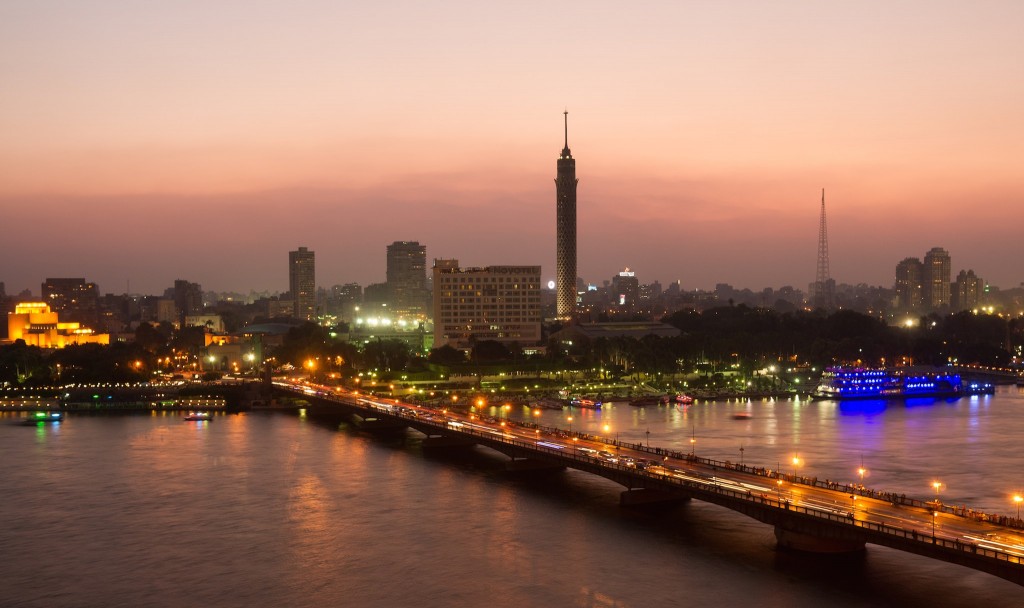
Who Rules the Street in Cairo? The Residents Who Build It

Michael Kimmelman, reporting for the New York Times:

A struggle — and also a race — pits the forces of collapse against the halting emergence of a new urban class, born in the aftermath of the revolution. Egyptians have long been experts at fending for themselves in a top-down system where the president ruled by fiat and the government was unaccountable. But now they must improvise as never before. This means that Egyptians are figuring out anew how they relate to one another and to the city they have always occupied without quite fully owning — figuring out how to create that city for themselves, politically and socially, as well as with bricks and mortar.

Post to Twitter, Facebook

When Algae on the Exterior Is a Good Thing

David Wallis, reporting for the New York Times:

A new apartment complex in Hamburg, Germany, intends to generate heat, as well as revenue, from growing the micro-organism. The five-story Bio Intelligent Quotient (B.I.Q.) building, which was expected to become fully operational on Wednesday, has a high-tech facade that looks like a cross between a Mondrian painting and a terrarium but is actually a vertical algae farm.

I don’t even know what to think about this one.

Post to Twitter, Facebook

An Architectural Reflection of George W. Bush

Henry Grabar, writing for the Atlantic Cities:

The Bushes are passionate about sustainable architecture, and the Center has reflective roofs, solar panels, and the infrastructure to harvest rainwater. It is LEED Platinum-certified. 

Seriously? I’m not doubting Grabar’s reporting on this, but I’m struggling to square the Bushes’ “passions” with his actions while president.

Post to Twitter, Facebook

Secrets of Cloud Formation, Revealed in the Amazon

Adrianne Appel, reporting for NOVA Next:

There is so much particulate matter in the air in heavily developed regions like North America and Europe—mostly from pollutants—that scientists are unable to easily study which particles impact cloud formation and how. The “cleanest” atmosphere in rural North America, for example, has 2,000 or more particles per cubic centimeter; most are from pollution. Those numbers soar near cities, where densities can be as high as 10,000 to 100,000 particles per cubic centimeter. “There is too much noise in the atmosphere,” Martin says.

There are a few places where particulate signals are quieter.

One guess where one of those is.

Post to Twitter, Facebook

How the Decline of the Traditional Workplace Is Changing Our Cities

Emily Badger, writing at the Atlantic Cities:

For decades, cities have reflected the neat separation of work and home, with residences in one part of town, offices and industry in another, and infrastructure (highways, parking garages, hub-and-spoke transit systems) built to help connect us between the two around what has been for many people a 9-to-5 work day. But what happens when more people start to work outside of offices, or really anywhere – at all times?

Post to Twitter, Facebook

The internet’s image problem

Alex Wild wrote about image sharing (without attribution or concern for copyright) run rampant at his blog, Compound Eye. The object of his ire is I Fucking Love Science, a keen Facebook page that’s become a hub of science outreach on the web. It’s a great page, but many, many images are posted there daily without attribution, and Elise Andrews, who runs the page, makes money off the venture.

But I’d argue that that’s just the tip of the iceberg. Andrews is an independent operator, and her transgressions are minor and, as Wild rightly points out, could be easily remedied. The bigger problem is that large, corporate sites, often with millions of dollars in revenue or deep pockets lined with venture capital, have the same blasé attitudes about creator’s rights. They frequently misappropriate copyrighted images to generate traffic and ad impressions on their sites, sending paltry traffic to the original site. I’m talking about BuzzFeed, Gizmodo, Popular Science, Business Insider, and others. I’m speaking from experience here. They’ve all taken my infographics, without permission, and posted them to their sites, in some cases without even proper attribution or a link.

I’ll grant that the internet is still a bit the Wild West, but that doesn’t mean it should be a free-for-all. Even Huffington Post writers have gotten in trouble for “over aggregation” of written posts. (Sad, in a way, because I’m sure the writer was pressured to do exactly that.) But with images, there seem to be fewer qualms. What makes images different?

I’ll leave you with a few words from Ed Yong, who chimed in last night on Twitter: “If someone posted my writing on their site w/o link or credit, I’d be fucking outraged. This is not different.”

Post to Twitter, Facebook

More reasons to stop putting trees on skyscrapers

Bosco Verticale

Robert Krulwich, disagreeing with me:

Two residential towers, dense with trees, will have their official opening later this year in downtown Milan, Italy, near the Porta Garibaldi railroad station. (The image is not a photograph, but an architect’s rendering. The towers are built and the trees are going in right now.) I love this. I think these towers are gorgeous. Milan is a very polluted town; these trees will cleanse the air, pumping out oxygen and greening the cityscape. I think cities one day could look like mountain vistas; I’m enthralled.

But I am not Tim De Chant, tree lover, blogger, critic, who says this won’t work. All these trees, he thinks, are about to be dead. He recently posted an essay on his Per Square Mile blog, aimed at architects. He called it, “Can we please stop drawing trees on top of skyscrapers?” He thinks builders know squat about trees. I hope he’s wrong.

I know I seem like Buzz Killington to a lot of architects—and non-architects, Krulwich included—but that wasn’t my point…entirely. To me, trees atop buildings have become an architectural crutch, a way to make your building feel sustainable without necessarily being so. And that’s a charitable assessment. Here’s how I really feel—trees on skyscrapers are a distraction from rampant development and deforestation. They’re trees for the rich and no one else. They’re the soma in architecture’s brave new world of “sustainable” development.

In reality, trees on skyscrapers will likely be anything but sustainable. Structures built to support trees need to be over-engineered compared with their abiotic equivalents—trees are heavy, so is dirt (multiply so when wet), and so are watering systems required to keep them alive. If those trees are to have a chance on these windy precipices, their planters had better be deep, which further compounds problems raised in the previous sentence. A skyscraper that’s built to support trees will require more concrete, more steel, more of anything structural. That’s a lot of carbon, not to mention other resources, spent simply hoisting vegetation dozens of stories up, probably more than will ever be recouped in the trees’ lifetimes.

Bosco Verticale, the oft, and often only, cited example of a tower to be built with trees on top, is expected to cost $85 million. Stefano Boeri, the architect, estimates adding trees to the design pushed up construction costs about 5 percent. (No word on maintenance costs.) Whether that’s true or not, we’ll have to take his word for it. If we do, that means they will spend $4.25 million to put 2.5 acres—one hectare—of forest onto the side of a building.

Now, let’s say we take that money and resuscitate the region’s natural habitat.¹ Average costs run about $500 per acre for reforestation in U.S. national forests, with a top end of about $2,000 per acre. Let’s assume the worst. That means that with $4.25 million, you could restore 2,125 acres, or about 860 hectares, of forest. That’s 860 times more forest than is plastered on the side of Bosco Verticale. At the least. If restoration costs come in at the low end, about $200 per acre, it could be as high as 8,600 times more.

Then there’s the ecological value of each. Bosco Verticale will be home to a few birds (most of which will live in the city regardless) and some invertebrates, but not much else. It’ll also require massive human inputs—water, fertilizer, tending, and replacement. I covered the first of those three in my previous essay, so I’ll just elaborate on the last point here, replacement. Let’s say trees on a skyscraper will live for an average of 20 years—a generous assumption given that more than 50 percent of street trees, which are exposed to more benign conditions, die after just 10 years—what will we have gained? A skyscraper that needs an overhaul every 20 years.

A real forest, on the other hand, can replace itself. It can also support hundreds, even thousands of species, even in the middle of the city. A survey of the 315-hectare Central Park, for example, found over 800 species. Near Milan, at Parco Regionale di Montevecchia e della Valle del Curone, there nearly 1,000 known species on it’s 2,350 hectares. Biodiversity is just one measure. These forests also purify water, maintain nutrient cycles, and don’t require much in the way of maintenance (if any).

Here’s an alternate plan: Instead of planting trees on buildings, let’s focus on preserving and restoring places that already have, or desperately need, trees. Boeri and I agree on the importance of the latter. Bosco Verticale is the first stage of Boeri’s larger plan, one that includes preservation and restoration of existing land.² Bravo. It’s clear that Boeri understands the big picture, that to make a truly sustainable city, you have to incorporate ecosystem function on a broad scale.

We still disagree on the value of trees on skyscrapers: he, and Krulwich, see them as an inspiration; I see them as a distraction and potential liability—what if the Bosco Verticale becomes a brown eyesore, turning people off to his larger vision? I’d love it if Bosco Verticale and other proposed arboreal skyscrapers were sustainable and successful.³ Who wouldn’t want to live in a city full of tree towers? But I just can’t make a case for it. Plant physiology tells me that the trees, if they do survive, will require constant and costly maintenance throughout their short, brutal lives. Finance tells me that the money required to afforest a building would be more effectively used for restoration and preservation. And my gut tells me there are more equitable ways to give people trees, not just to those who can afford it.


  1. You could also plant street trees or reserve more land for parks, both laudable and equitable uses.
  2. Among the proposals is a greenbelt around the city. They’ll be great parks, but won’t do much to contain the city.
  3. Really, Robert, I do!

Sources:

Roman, Lara. 2006. Trends in street tree survival, Philadelphia, PA. Master’s thesis.

Gorte, Ross W. 2009. U.S. Tree Planting for Carbon Sequestration. Congressional Research Service R40562.

Illustration of Bosco Verticale.

Related posts:

Can we please stop drawing trees on top of skyscrapers?

Urban trees reveal income inequality

Income inequality, as seen from space

Post to Twitter, Facebook

Converting city buses into showers for the homeless

Christina Farr, reporting for Venture Beat:

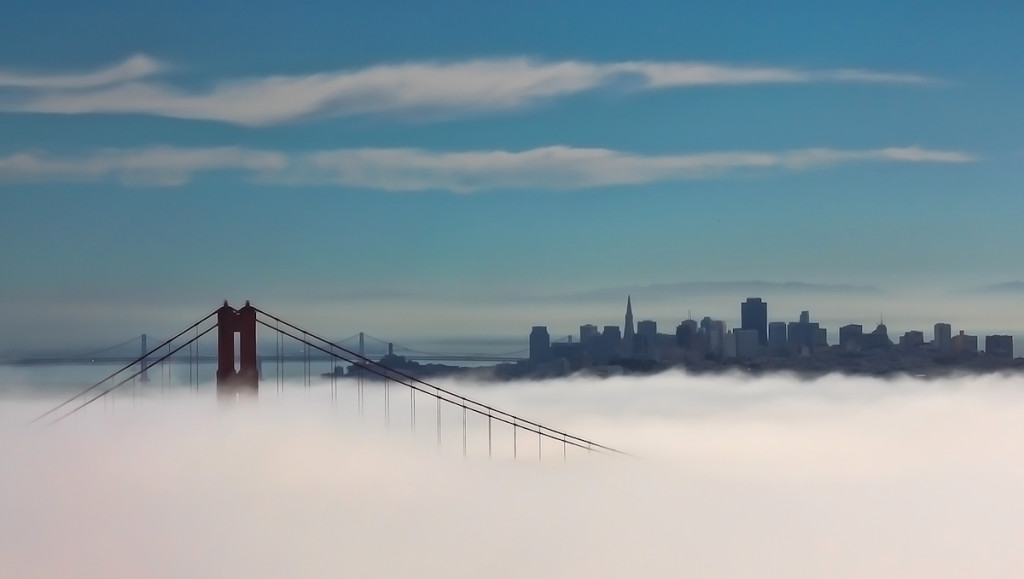
San Francisco is teeming with tech entrepreneurs who want to save the world but who’ll pass by the homeless person on the street without a second glance. Doniece Sandoval, a Bay Area tech entrepreneur, is not one of them. Her latest trick? Turning retired city buses into mobile showers for the homeless. The initiative, known as Lava Mae, is a response to a desperate need in the city. According to the most recent count, more than 6,500 homeless people sleep on the street or in shelters in San Francisco, and there are only eight shower facilities specifically available to the homeless, and most of these have just one or two stalls and aren’t open every day.

Post to Twitter, Facebook